ORIGINAL RESEARCH ARTICLE | April 4, 2026
Sector-Specific Employment, Educational Attainment and Gender Inequality in the Economic Community of West African States (ECOWAS)
Johnbosco Chukwuma Ozigbu, Christopher Ifeanyi Ezekwe
Page no 140-144 |
https://doi.org/10.36348/sjef.2026.v10i04.002
The gender gap in labour force participation and educational attainment remains a persistent challenge in the ECOWAS region, undermining social progress and the Sustainable Development Goals (SDGs), particularly SDG 5. Thus, we provide valuable insights into how the dynamics of female employment in the agriculture, industrial, and service sectors, as well as female school enrolment, contribute to reducing the gender inequality in ten selected countries (Benin, Burkina Faso, Ghana, Liberia, Mali, Niger, Nigeria, Senegal, Sierra Leone, and Togo) within the ECOWAS region. The panel datasets were obtained from the World Development Indicators of the World Bank and the United Nations Development Programme (UNDP) Human Development Report from 2005 to 2023. We employed pooled regression, fixed- and random-effects models, and the Hausman test, in conjunction with descriptive statistics, to analyse the datasets. Findings from the stylised facts for the aggregate sample indicated that the gender inequality index averaged 0.620, highlighting the pronounced discrimination faced by women and girls compared to men and boys across critical dimensions of human development, including employment, education, health, and political participation. The summary statistics for the disaggregated sample revealed that Nigeria is the least performing country in reducing the gender gap, showing an average gender inequality index of 0.676, which is greater than the regional average during 2005 - 2010. However, Senegal demonstrated an impressive performance in reducing gender inequality, with an average gender inequality index of 0.543 during the study period (2005-2023) and a decline from 0.546 in 2011 to 0.49 in 2023. More importantly, the random-effects findings indicated that female employment in agriculture significantly reduced gender inequality during the study period. This underscores the extensive involvement of women in agricultural activities and their contribution to the economic empowerment and financial independence of women in the ECOWAS region. Similarly, the random effects results indicated negative, significant impacts of female employment in industry and services on the gender parity index. The magnitude of this impact is greater than that of female employment in agriculture, suggesting that employment in industry and services offers women improved working conditions and status due to the associated higher and more stable income, alongside labour protections and social security benefits. However, the results further reveal that female primary school enrolment does not significantly reduce gender inequality during the student period. This underscores the inadequacy of primary education in mitigating structural inequalities, owing to limited economic empowerment and rising school dropout rates. Given the findings, we recommend that policymakers in the ECOWAS prioritise gender-sensitive employment and education by enhancing women's access to land and decent work, eliminating workplace discrimination, supporting female entrepreneurship, and promoting equal educational opportunities.
REVIEW ARTICLE | April 4, 2026
Association between Migraine and Dementia: A Systematic Review of Observational and Mendelian Randomization Studies
Yasmine Ibrahim Al-Najjar, Mayyadah Zaben Alfadhil, Danah Mohammed Almakayil
Page no 183-193 |
https://doi.org/10.36348/sjmps.2026.v12i04.002
Background: Migraine and dementia are prevalent neurological disorders with overlapping pathophysiological mechanisms. The association between migraine and dementia risk remains debated, with conflicting findings from observational studies and emerging evidence from Mendelian randomization (MR) studies. Methods: This systematic review followed PRISMA guidelines. A comprehensive literature search was conducted in PubMed/MEDLINE, Embase, and Web of Science for publications from January 2021 to January 2026. Eligible studies included observational cohort studies and MR studies examining the association between migraine and dementia outcomes in adults. Risk of bias was assessed using the Newcastle-Ottawa Scale for cohort studies and a modified ROBINS-I framework for MR studies. A narrative synthesis was performed due to substantial heterogeneity. Results: Seven studies met inclusion criteria: five population-based cohort studies and two two-sample MR studies. Among cohort studies, four reported significant positive associations between migraine and dementia risk, with hazard ratios ranging from 1.21 to 1.37 for all-cause dementia, 1.29 to 1.31 for Alzheimer's disease (AD), and 1.21 to 1.35 for vascular dementia (VaD). One Swedish cohort study reported no significant associations. MR studies provided evidence supporting a causal relationship between genetically predicted migraine and increased AD risk (odds ratios 1.09–1.10), with thalamic atrophy identified as a partial mediator (28.2% of the total effect). Bidirectional MR analysis revealed that migraine increases AD risk while VaD increases migraine risk. Migraine subtype, aura status, and case definition influenced observed associations. Conclusion: Current evidence suggests migraine is associated with increased risk of dementia, particularly AD and VaD, with MR studies supporting causal relationships. Heterogeneity across studies highlights the importance of diagnostic methods, population characteristics, and dementia subtype specification. Future research should employ standardized diagnostic criteria, detailed migraine phenotyping, and investigate the potential neuroprotective effects of migraine management on cognitive outcomes.
REVIEW ARTICLE | April 4, 2026
Use of Artificial Intelligence in Diagnosing Root Fractures: A Systematic Review
Yashashwi Bhandari, Yash Bhandari, Sowmya Akkanapally, Rutuja Patil, Umaarah Asif, Helly Thaker, Nishtha Sharma, Helly Shiroya
Page no 98-104 |
https://doi.org/10.36348/sjbr.2026.v11i04.002
Background: Root fractures represent a relatively rare form of dental trauma and are often challenging to identify using routine clinical examination and conventional radiographic techniques. Accurate and timely diagnosis is crucial for appropriate treatment planning and to achieve favourable clinical outcomes. In recent years, artificial intelligence (AI) has gained attention in dentistry due to its ability to analyze imaging data with high precision and assist clinicians in diagnostic decision-making. Purpose: The aim of this systematic review is to assess the role and diagnostic effectiveness of artificial intelligence in identifying root fractures. Study selection: A systematic literature search was performed using PUBMED, MEDLINE, EMBASE, and COCHRANE Library with language restriction to English. The search was carried out incorporating the published literature till 2025 using the MeSH (medical subject heading) terms. A literature search was done out of 205 publications, related to search strategy, 57 full articles, which were related to the study, were acquired for further inspection. Out of the 57 articles, 9 articles met the inclusion criteria. Information related to study characteristics, types of AI models used, imaging techniques, and reported diagnostic performance was collected and reviewed. Results: The findings from the 9 selected studies indicate that AI systems, especially deep learning models such as convolutional neural networks, demonstrate considerable potential in detecting root fractures in dental images. Many investigations reported strong diagnostic performance with notable levels of accuracy, sensitivity, and specificity. These findings highlight the significant potential of AI-assisted analysis helped improve diagnostic consistency and supported clinicians in recognizing fractures that may be difficult to detect through visual assessment alone. Conclusion and Relevance: Artificial intelligence shows significant promise as a supportive diagnostic tool for the detection of root fractures. Despite the encouraging results, further well-designed studies with larger datasets and clinical validation are required before AI technologies can be widely integrated into routine dental practice. Artificial intelligence enhances the accuracy and consistency of root fracture detection, aiding clinicians in early and reliable diagnosis. Its integration into dental imaging can reduce diagnostic errors and support timely treatment decisions.
ORIGINAL RESEARCH ARTICLE | April 4, 2026
Hand Hygiene Promotion and Education: Handwashing Practices with Soap and Water at the Félix Houphouët-Boigny University in the District of Abidjan (Ivory Coast)
N’gbesso Jean-Paul N’gbesso, Serge Mambey, Okoubo Née Nicaise A. N’guessan, Kouablan Bernard Christ, Doumbia Mariamou Cisse, Allou Aimé Constantin Ahoua, Kouao Kouassi Bla, Adaye Akossia Salimata, Moro Romance, Zampa N’koumo Fabrice Y. P, Gnagne doh eugénie
Page no 249-255 |
https://doi.org/10.36348/jaep.2026.v10i04.002
A study on the state of knowledge of handwashing with soap and water at Félix HOUPHOUET-BOIGNY University, followed by awareness-raising on good practices was undertaken between 14 and 26 October 2019 to help guide the development of a programme to promote good hygiene practices. A survey form that included columns of variables such as name, age, gender, and function was used in conjunction with handwashing practice. A total of 2024 individuals, 478 (23.62%) of whom were female and 1546 (76.38%) male, participated in the survey. The study found that 5.04% of people (female and male) have good handwashing practices. The good practice of handwashing at the Félix HOUPHOUET-BOIGNY University is less well known. However, the science faculties had good handwashing practice compared to students in other faculties. It would be advisable to increase awareness of good hygiene practices, particularly handwashing, in order to prevent infections.
ORIGINAL RESEARCH ARTICLE | April 4, 2026
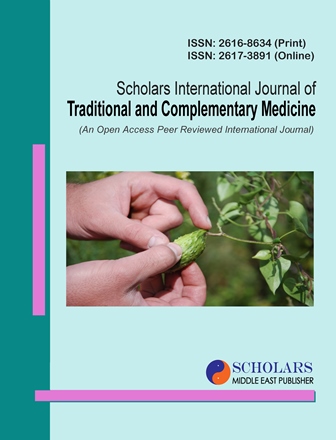
Investigating the Impact of Cucumis sativus Aqueous Fruit Juice on Reproductive Health in Adult Male Wistar Rats
Best Egbiremhon, Okhuahesogie Esosa, Sam-Duru Prisca, Akubuo Precious, Joseph Rich
Page no 176-182 |
https://doi.org/10.36348/sjmps.2026.v12i04.001
Background: Cucumis sativus (cucumber) is a widely consumed fruit known for its high water content and antioxidant properties. Despite its numerous health benefits, limited research has been conducted on its potential effects on male reproductive health. This study investigated the impact of cucumber fruit juice on male reproductive hormones and semen quality parameters. Methods: Male Wistar rats were divided into three groups: a control group and two experimental groups receiving 10 ml/kg and 20 ml/kg of Cucumis sativus fruit juice daily for four weeks. Serum samples were analyzed for follicle-stimulating hormone (FSH), luteinizing hormone (LH), and testosterone levels using enzyme-linked immunosorbent assay (ELISA). Semen samples were evaluated for sperm motility, viability, morphology, and abnormal sperm cell count. Results: The administration of cucumber juice did not significantly affect FSH, LH, or testosterone levels (p > 0.05), indicating that the fruit juice does not interfere with endocrine regulation of male reproduction. However, sperm quality parameters showed significant improvements. Sperm motility increased notably in the experimental groups, with the highest motility observed in the 20 ml/kg group. Sperm viability and normal morphology were also significantly enhanced compared to the control (p < 0.05). The percentage of sperm abnormalities, including head defects, mid-piece distortions, and cytoplasmic droplets, was significantly reduced, particularly at the higher dose. These findings suggest that cucumber juice may improve sperm function without altering hormonal balance. Conclusion: The results indicate that Cucumis sativus fruit juice has a beneficial effect on sperm quality, enhancing motility, viability, and morphology while reducing sperm abnormalities. These improvements may be attributed to the antioxidant and hydrating properties of cucumber, which help to reduce oxidative stress and support testicular function. However, the absence of significant hormonal changes suggests that its effects on male fertility are primarily local rather than systemic.
ORIGINAL RESEARCH ARTICLE | April 3, 2026
Intra-Gender Oppression: Examining the Girl-Child’s Exploitation in Ted Elemeforo’s Child of Destiny
Ebiketonmor Opomu, Blessing Oboli
Page no 38-44 |
https://doi.org/10.36348/sijll.2026.v09i04.002
Fictionalisation of women’s oppression shows writers’ commitment at different times to keep readers abreast with trending issues which are seemingly despicable to the society. This paper draws attention away from representations on the overburdened issue of inter-gender oppression; of men and women, to intra-gender oppression among women. It aims to examine the latter, with particular focus on how it is enabled in a relationship between adults and children. It considers this topic as an important literary theme that is yet to be given significant scholarship attention. Its significance rests on the fresh perspectives it offers and helps to expand on the overall issue of oppression that has continued to plague the society. It uses Ted Elemeforo’s Child of Destiny to provide credible evidence. The qualitative analysis procedure is employed, with the support of the intersectionality theory relating to feminism, and Marxism, to explain how oppression thrives in the society despite consistent opposition. The findings affirm that women oppress and exploit members of their sex. This happens mostly in unequal social relations like, between adults and underprivileged children as demonstrated in the meeting between the text’s female characters: Madam Lizzy and Ebika. It shows that this practice is aided by salient social factors like class, age, sex among others, which inevitably stand in the way of eradicating oppression. The paper, thus, concludes that oppression has to be seen as a complex phenomenon requiring multifaced approach to be eliminated.
This paper presents the results of the reliability-based design of pad foundation based on the results of the geotechnical investigation of the soil sample collected at 1m to 5m depth in Abuloma Community, Rivers State. Three boreholes, namely BH1, BH2 and BH3 were excavated utilizing a manual auger to depths of 1m, 2m, 3m, 4m, and 5m respectively. Laboratory investigations were conducted on the soil samples in the laboratory to determine the geotechnical properties of the soil such as soil cohesion, Poisson’s ratio, unit weight, angle of internal friction, and modulus of elasticity of the soil respectively. The bearing capacity of the soil at each selected location was obtained using Terzaghi’s bearing capacity formula. The results of the laboratory investigations on the soil properties such as cohesion, Poisson’s ratio, specific weight, internal friction angle, and elasticity modulus of the soil were used to conduct the reliability assessment and reliability-based design of the pad foundation at Abuloma using the method of response surface. The descriptive statistics of the geotechnical parameters were obtained utilizing a statistical tool called Minitab 17.0. The Full Factorial method of design of Experimental Design was used to obtain the design points. The types of probability distribution of the basic random variables were established using Anderson Darling Statistics. The performance functions were developed were developed considering bearing capacity and immediate settlement failure of the pad foundation at the four selected locations. The First Order Reliability technique implemented in MATLAB was used in the reliability estimates. The findings revealed that the Abuloma soil is safe only for a foundation pressure of 50KPa and for foundation pressures of 50KPa, 100KPa and 150KPa respectively when considering settlement criterion. The reliability indices generally decreased with increase in values of variation coefficient of soil cohesion, internal friction angle and soil density respectively. The MATLAB code developed is very easy for application geotechnical and coastal applications.

 This work is licensed under a Creative Commons Attribution-NonCommercial 4.0 International License.